Stress and Aging: How to Turn Down the Volume on Life’s Demands
In the relentless rhythm of modern American life, stress has become an almost constant companion. From the daily grind of work and family responsibilities to navigating an ever-changing world, it often feels like we’re perpetually running on fumes. We might joke about our stress levels, but beneath the surface, a silent battle is raging within our bodies, subtly accelerating the aging process and chipping away at our health.
At VitalYears, we understand that stress isn’t just a feeling; it’s a powerful physiological response that impacts every cell in your body. While acute stress can be a motivator, chronic, unmanaged stress acts like a corrosive agent, contributing to everything from premature wrinkles to serious chronic diseases. This guide isn’t about eliminating stress—an impossible feat in today’s world but about empowering you with science-backed strategies to build resilience, manage its impact, and protect your healthspan. Let’s learn how to turn down the volume on life’s demands and reclaim your vitality.
Quick Answer: How does stress affect aging, and what can you do?
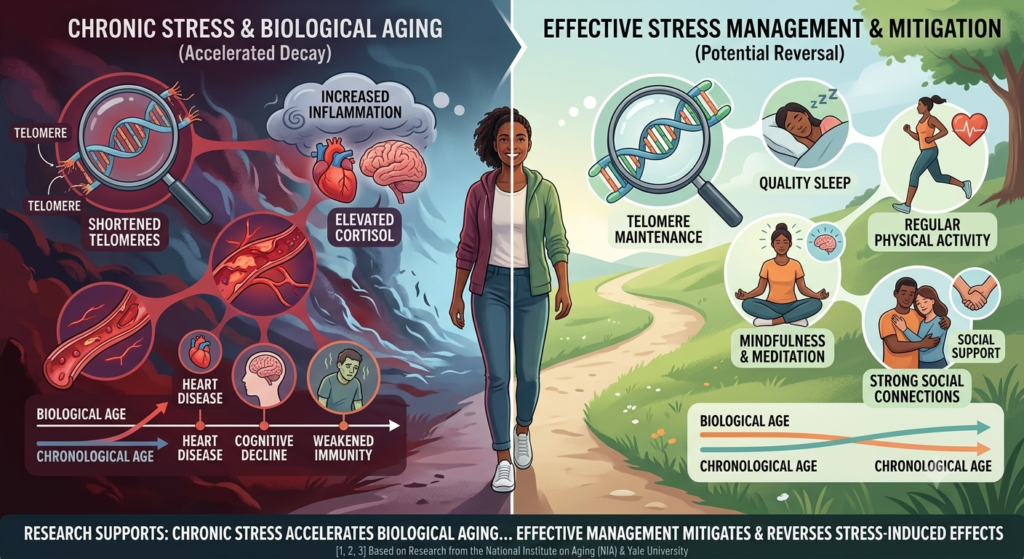
Chronic stress significantly accelerates biological aging by increasing inflammation, shortening telomeres, and disrupting hormonal balance (e.g., elevated cortisol). This contributes to a higher risk of heart disease, cognitive decline, and weakened immunity. Effective stress management, including mindfulness, regular physical activity, quality sleep, and strong social connections, can mitigate these effects and even reverse stress-induced biological aging, according to research from the NIA and Yale University [1, 2, 3].
The Silent Saboteur: How Stress Accelerates Aging
Stress isn’t just in your head; it’s a whole-body experience. When you face a perceived threat whether it’s a looming deadline or a traffic jam your body floods with hormones like cortisol and adrenaline, preparing you for “fight or flight.” This acute stress response is essential for survival. However, in our modern world, these alarms are often triggered continuously, leading to chronic stress, which has detrimental effects on your long-term health.
1. The Cortisol Cascade: A Hormonal Overload
Cortisol, often called the “stress hormone,” is vital in short bursts. But chronically elevated cortisol levels, common in high-stress American lifestyles, can wreak havoc. It suppresses your immune system, increases inflammation, disrupts sleep, and can even lead to abdominal fat accumulation all factors that accelerate aging and increase disease risk [4, 5].
2. Inflammaging: Fueling the Internal Fire
Chronic stress is a major contributor to “inflammaging” the low-grade, systemic inflammation that drives many age-related diseases. This persistent inflammation damages cells and tissues, contributing to conditions like heart disease, type 2 diabetes, and neurodegenerative disorders [6].
3. Telomeres: The Fraying Ends of Your DNA
Imagine the plastic tips on your shoelaces; these are like telomeres, protective caps on the ends of your DNA. Each time your cells divide, telomeres shorten. When they become too short, cells can no longer divide and may become senescent (aging cells that contribute to inflammation). Chronic stress has been shown to accelerate telomere shortening, effectively speeding up cellular aging [7].
4. Brain Drain: Impact on Cognitive Function
Stress doesn’t just make you feel frazzled; it can physically alter your brain. Chronic stress can shrink the hippocampus (a brain region crucial for memory and learning) and impair cognitive function, making you more susceptible to age-related cognitive decline [8].
Scientific Evidence: The Undeniable Link
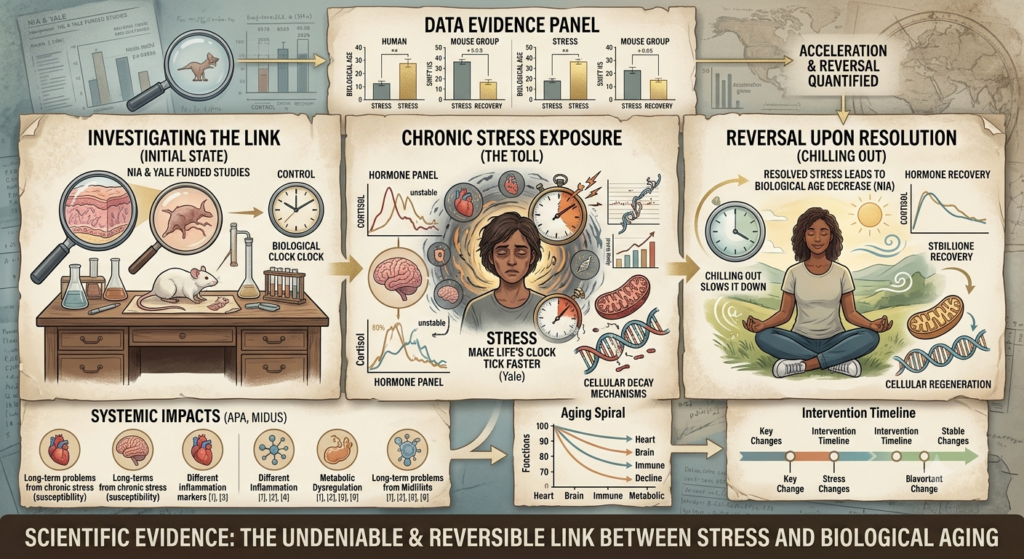
Research consistently highlights the profound connection between stress and accelerated aging. A study funded by the National Institute on Aging (NIA) demonstrated that exposure to stress increased biological age in humans and mice, but remarkably, this biological age decreased after the stress resolved, suggesting that stress-induced aging is reversible [1]. Yale University research further supports this, showing that stress makes life’s clock tick faster, but chilling out slows it down [2]. The American Psychological Association emphasizes that chronic stress contributes to long-term problems for cardiovascular, immune, and metabolic systems, increasing susceptibility to various health issues [5]. Furthermore, studies from the Midlife in the United States (MIDUS) project have explored the link between lifetime chronic stress exposures, stress hormones, and biological aging markers in midlife adults [9].
Practical Tips: Your Toolkit for Stress Resilience
While we can’t always control external stressors, we can absolutely control our response to them. Building a robust stress resilience toolkit is crucial for healthy aging in the American context.
- Mindfulness and Meditation: Even a few minutes a day can make a difference. Practices like deep breathing, guided meditation, or simply focusing on your senses can activate your parasympathetic nervous system, promoting relaxation and reducing cortisol [10]. Apps like Calm or Headspace are popular American resources.
- Move Your Body: Physical activity is a powerful stress reliever. Exercise reduces stress hormones and stimulates the production of endorphins, natural mood elevators. Aim for regular moderate-intensity activity, whether it’s a brisk walk, a yoga class, or dancing to your favorite tunes [11].
- Prioritize Quality Sleep: Stress and sleep have a bidirectional relationship. Chronic stress disrupts sleep, and poor sleep makes you more vulnerable to stress. Revisit the tips from our “Complete Guide to Better Sleep” to establish a consistent, restorative sleep routine [12].
- Nourish Your Body: A balanced, anti-inflammatory diet supports your body’s ability to cope with stress. Limit processed foods, sugar, and excessive caffeine, which can exacerbate stress responses. Focus on whole foods, fruits, vegetables, and healthy fats [11].
- Cultivate Social Connections: Humans are wired for connection. Spending time with loved ones, joining community groups, or volunteering can provide emotional support, reduce feelings of isolation, and act as a buffer against stress. In a society that often emphasizes individual achievement, remember the power of community [13].
- Practice Gratitude: Taking a few moments each day to acknowledge things you’re grateful for can shift your perspective and reduce feelings of overwhelm. Keep a gratitude journal or simply reflect on positive experiences.
- Set Boundaries: In a culture that often encourages overworking, learning to say “no” and protecting your time and energy is a vital stress management skill. Don’t be afraid to disconnect from work emails or social media when you need to recharge.
Frequently Asked Questions (FAQ)
Q: Can stress really make me look older? A: Yes, chronic stress can contribute to premature aging of the skin (e.g., wrinkles, dullness) due to its impact on collagen production, inflammation, and cellular repair processes. It’s not just an old wives’ tale!
Q: Is all stress bad? A: No, not all stress is bad. Acute stress (eustress) can be motivating and help us perform under pressure. It’s chronic, unmanaged stress that becomes problematic, leading to distress and negative health outcomes.
Q: When should I seek professional help for stress? A: If stress feels overwhelming, interferes with your daily life, or leads to symptoms of anxiety or depression, it’s important to seek professional help. Therapists, counselors, or doctors can provide strategies and support tailored to your needs. There’s no shame in seeking help.
Conclusion: Reclaim Your Calm, Reclaim Your Years
Stress is an unavoidable part of life, but its power over your health and aging process is not. By understanding how chronic stress impacts your body and mind, and by actively implementing evidence-based coping strategies, you can build remarkable resilience. It’s about taking proactive steps to protect your cellular health, sharpen your mind, and fortify your emotional well-being. In doing so, you’re not just managing stress; you’re investing in a longer, healthier, and more joyful American life, where you’re in control of your vitality.
Next Steps: Choose one stress management technique from this guide that resonates with you and commit to practicing it daily for the next week. Whether it’s five minutes of mindful breathing, a brisk walk during your lunch break, or calling a friend, every small step contributes to a calmer, more resilient you.
Check out our post below:
The Mediterranean Diet Explained: Your Passport to a Longer, Healthier American Life
References:
- NIA – Stress-induced increases in biological age are reversible
- Yale News – Stress makes life’s clock tick faster — chilling out slows it down
- Nature – Psychological and biological resilience modulates the effects of stress on biological aging
- WMChealth – The Hidden Effects of Chronic Stress on Your Body and Mind
- American Psychological Association – Stress effects on the body
- Molecular You – Can Stress Age You? Biomarkers Reveal the Truth
- ScienceDirect – Stress-induced biological aging: A review and guide for research
- Harvard Health – Top ways to reduce daily stress
- MIDUS – Lifetime chronic stress exposures, stress hormones, and biological aging
- CDC – Managing Stress | Mental Health
- Greenbrook Medical – Aging Gracefully: How to Navigate Life’s Stressors as a Senior
- VitalYears – The Complete Guide to Better Sleep
13. PMC – Stress on health-related quality of life in older adults