

The Blue Zones Lifestyle: Unlocking the Secrets to a Longer, Happier American Life
Imagine a place where people routinely live to 100, not just surviving, but thriving—active, engaged, and free from chronic diseases that plague much of the modern world. These aren’t mythical lands; they’re real places on our planet, identified as “Blue Zones.” From the mountains of Sardinia to the islands of Okinawa, these communities offer a powerful blueprint for longevity that transcends genetics and medicine. In an American society often grappling with health challenges and the pursuit of happiness, the lessons from the Blue Zones offer a refreshing, attainable path to a more vibrant future. At VitalYears, we believe that living longer and better isn’t about extreme diets or grueling workouts; it’s about cultivating a lifestyle that naturally promotes health and well-being. The Blue Zones research, pioneered by Dan Buettner, reveals nine common denominators—the “Power 9″—that are surprisingly simple yet profoundly effective. This guide will explore these timeless principles and show you how to adapt them to your American life, helping you create your own personal Blue Zone, right where you are.
Quick Answer: What are the core principles of the Blue Zones lifestyle?
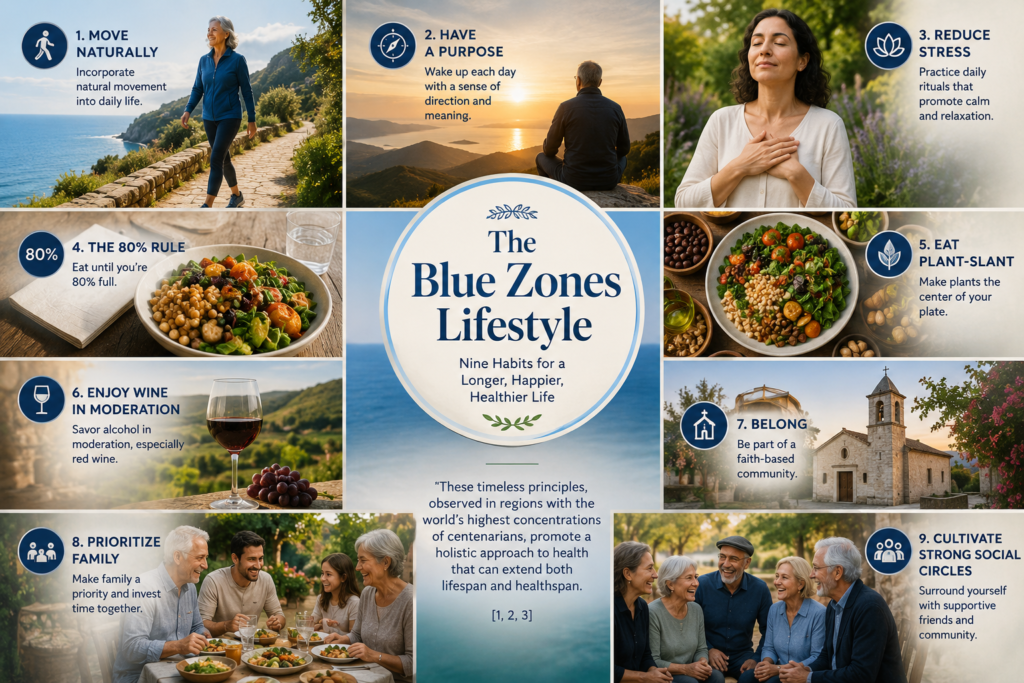
The Blue Zones lifestyle is characterized by nine interconnected habits: natural movement, a sense of purpose, stress reduction, the 80% rule (eating until 80% full), a plant-slant diet, moderate alcohol intake (especially red wine), belonging to a faith-based community, prioritizing family, and cultivating strong social circles. These principles, observed in regions with the world’s highest concentrations of centenarians, emphasize a holistic approach to health that can significantly extend both lifespan and healthspan [1, 2, 3].
Beyond the Map: The Power 9 Principles
The Blue Zones aren’t just geographical locations; they’re living laboratories of longevity. Researchers have distilled their shared lifestyle traits into nine powerful principles, offering a roadmap for anyone seeking to live a longer, healthier life.
1. Move Naturally:
People in Blue Zones don’t hit the gym for hours; they live in environments that constantly nudge them to move. Gardening, walking, cooking, and doing household chores are integrated into their daily routines. It’s about constant, low-intensity physical activity, not structured exercise [1].
2. Purpose (Ikigai/Plan de Vida):
Having a reason to wake up in the morning—a sense of purpose—adds up to seven years to your life expectancy. Whether it’s caring for family, pursuing a passion, or contributing to your community, a clear purpose provides direction and meaning [1].
3. Downshift:
Even people in Blue Zones experience stress, but they have routines to shed it. Okinawans take a few moments each day to remember their ancestors, Adventists pray, Ikarians nap, and Sardinians enjoy happy hour. Finding ways to de-stress is crucial for long-term health [1].
4. The 80% Rule (Hara Hachi Bu):
The Okinawans have a 2,500-year-old Confucian mantra they say before meals: “Hara Hachi Bu,” which reminds them to stop eating when their stomachs are 80% full. This slight caloric restriction is a cornerstone of longevity, helping to maintain a healthy weight and reduce metabolic stress [1].
5. Plant Slant:
Beans, including fava, black, soy, and lentils, are the cornerstone of most Blue Zone diets. Meat is eaten sparingly, typically as a celebratory food, not a daily staple. Their diets are rich in fruits, vegetables, and whole grains, providing essential nutrients and fiber [1, 4].
6. Wine @ 5 (in moderation):
People in all Blue Zones (except Adventists) drink alcohol moderately and regularly. Moderate consumption of red wine, especially with friends and food, has been linked to heart health benefits. The key is moderation—1-2 glasses per day, preferably with meals [1].
7. Belong:
Research shows that attending faith-based services four times a month adds 4-14 years to life expectancy. This isn’t about specific dogma, but the sense of community and belonging that faith provides [1].
8. Loved Ones First:
Successful centenarians in Blue Zones put family first. They keep aging parents and grandparents nearby or in the home, commit to a life partner, and invest in their children with time and love. This strong family unit provides support and reduces stress [1].
9. Right Tribe:
The world’s longest-lived people chose—or were born into—social circles that supported healthy behaviors. Social networks (moais in Okinawa) reinforce positive habits, making healthy choices easier and more enjoyable [1].
Scientific Evidence: Validating the Longevity Blueprint
The Blue Zones research, initially published in National Geographic and further detailed in numerous books and studies, has significantly influenced our understanding of longevity. A comprehensive review in the American Journal of Lifestyle Medicine highlighted that these areas consistently show higher rates of centenarians and lower rates of chronic diseases compared to other populations [2]. Studies on the Blue Zones’ dietary patterns, particularly their plant-based focus and caloric restriction, have been linked to reduced inflammation, improved metabolic health, and enhanced cellular repair mechanisms [3, 4]. Furthermore, the emphasis on social connection and purpose aligns with broader research on mental well-being and its impact on physical health and lifespan [5]. The success of Blue Zones projects in various communities across the United States, aiming to implement these principles, further validates their applicability beyond their original geographical locations [6].
Adapting the Blue Zones to Your American Life
You don’t need to move to a remote island to embrace the Blue Zones lifestyle. Many of these principles can be seamlessly integrated into your daily American routine.
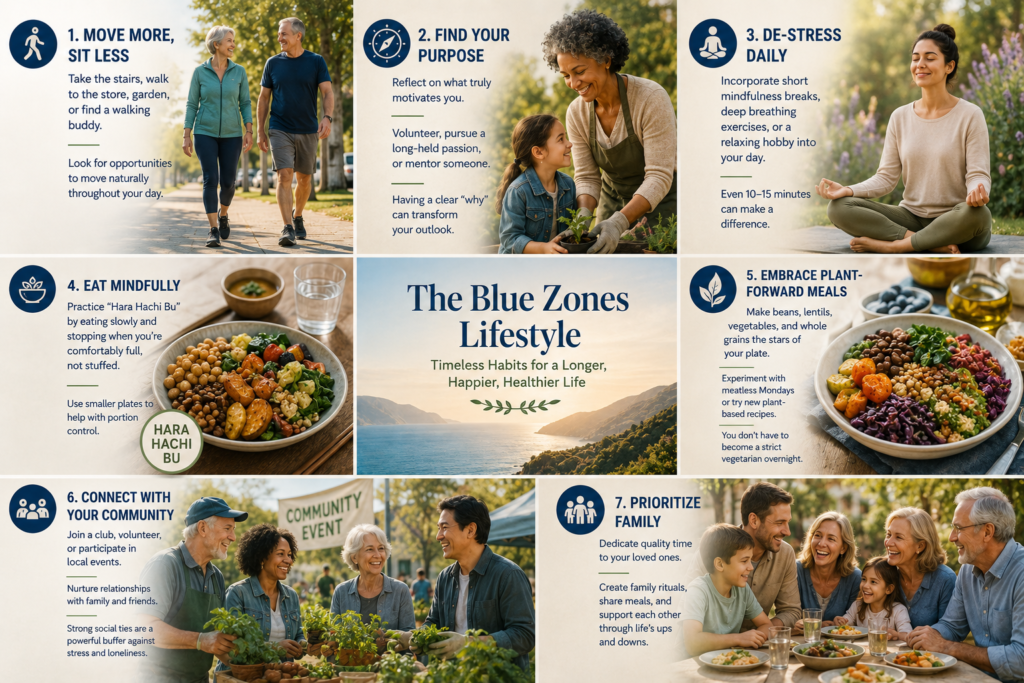
- Move More, Sit Less: Take the stairs, walk to the store, garden, or find a walking buddy. Look for opportunities to move naturally throughout your day.
- Find Your Purpose: Reflect on what truly motivates you. Volunteer, pursue a long-held passion, or mentor someone. Having a clear “why” can transform your outlook.
- De-Stress Daily: Incorporate short mindfulness breaks, deep breathing exercises, or a relaxing hobby into your day. Even 10-15 minutes can make a difference.
- Eat Mindfully: Practice “Hara Hachi Bu” by eating slowly and stopping when you’re comfortably full, not stuffed. Use smaller plates to help with portion control.
- Embrace Plant-Forward Meals: Make beans, lentils, vegetables, and whole grains the stars of your plate. Experiment with meatless Mondays or try new plant-based recipes. You don’t have to become a strict vegetarian overnight.
- Connect with Your Community: Join a club, volunteer, or participate in local events. Nurture relationships with family and friends. Strong social ties are a powerful buffer against stress and loneliness.
- Prioritize Family: Dedicate quality time to your loved ones. Create family rituals, share meals, and support each other through life’s ups and downs.
Frequently Asked Questions (FAQ)
Q: Do I have to drink wine to follow the Blue Zones lifestyle? A: No. While moderate wine consumption is a characteristic of some Blue Zones, it’s not a requirement. If you don’t drink alcohol, or prefer not to, there’s no need to start. The focus is on the social aspect and relaxation, which can be achieved through other means.
Q: Is the Blue Zones diet expensive to follow in the U.S.? A: Not at all. The core of the Blue Zones diet—beans, lentils, whole grains, and seasonal vegetables—are often among the most affordable foods. Buying in bulk, cooking at home, and focusing on plant-based staples can be very budget-friendly.
Q: How quickly can I expect to see results from adopting Blue Zones habits? A: While longevity is a long-term outcome, you can expect to feel more energetic, experience improved digestion, and have a greater sense of well-being within weeks of adopting these habits. The cumulative effect of these small, consistent changes builds over time.
Conclusion: Your Journey to a Longer, Happier Life Starts Now
The Blue Zones offer more than just a collection of health tips; they provide a profound insight into what it truly means to live well. By integrating their timeless wisdom—moving naturally, finding purpose, managing stress, eating wisely, and fostering deep connections—you’re not just adding years to your life; you’re adding life to your years. It’s a holistic, enjoyable, and sustainable path to a future filled with vitality, joy, and lasting well-being, right here in America.
Next Steps: Choose one Blue Zone principle that resonates most with you and commit to implementing it this week. Whether it’s taking a daily walk, reconnecting with an old friend, or trying a new plant-based recipe, every step brings you closer to your own personal Blue Zone.
References:
- Blue Zones – Power 9®
- PMC – Blue Zones: Lessons From the World’s Longest Lived
- Oak Street Health – 4 Key Principles Of The Blue Zone Diet & More
- Blue Zones – Blue Zones Diet: Food Secrets of the World’s Longest-Lived People
- UCLA Health – Want to live longer? 8 blue zone lessons for a healthier life
- Blue Zones – Home – Live Better, Longer
Check out our post below:
The Complete Guide to Healthy Aging: How to Thrive in Your 60s, 70s, and Beyond
2 thoughts on “The Blue Zones Lifestyle: Unlocking the Secrets to a Longer, Happier American Life”